How Much Does It Cost to Install a New Furnace in Durham, CA?
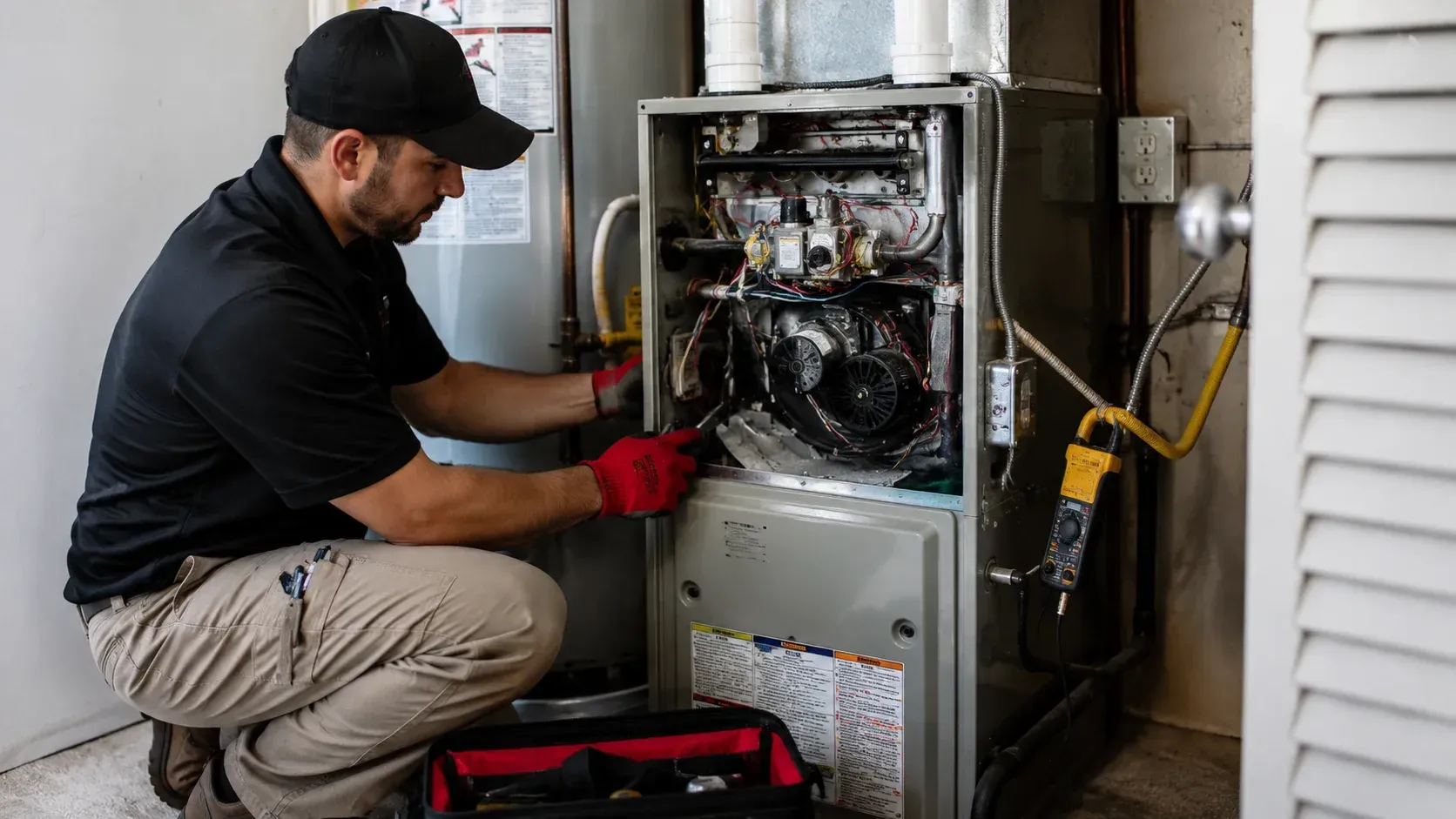
Table of Contents
- Introduction
- Breaking Down the Costs
- Furnace Types and Their Price Points
- Energy Efficiency Ratings and Long-Term Costs
- How Your Home Affects Installation Costs
- Ductwork and Timing Considerations
- What Happens During the Installation Process
- Questions to Ask Before Deciding
- Conclusion
- Frequently Asked Questions
Key Takeaways
- Furnace installation costs in Durham typically range from $3,000 to $8,000 depending on system type, size, and efficiency rating
- Labor, ductwork modifications, and site complexity can significantly impact your final bill
- Energy-efficient furnaces (95%+ AFUE) cost more upfront but deliver lower utility bills over time
- Installation complexity varies by home age, existing ductwork condition, and accessibility
- Understanding these factors helps you make an informed decision about your heating system upgrade
Introduction
A new furnace installation in Durham, California typically costs between $3,000 and $8,000, though some jobs fall outside this range depending on your situation. The final price depends on the furnace type, the size of your home, energy efficiency ratings, and how straightforward the furnace installation turns out to be.
If you own a home in Durham, understanding these costs matters. Your furnace is a major comfort investment, and knowing what drives the price helps you plan your budget, avoid surprises, and choose the right system. This guide walks you through everything that affects your furnace installation cost so you can move forward with confidence.
Breaking Down the Costs
When you get a quote, you're paying for several different things. Knowing what's included helps you understand why quotes vary from one contractor to the next.
Equipment usually makes up 40 to 50 percent of your total cost. A basic 80% AFUE furnace might run $1,500 to $2,500, while a high-efficiency unit at 90-plus percent AFUE runs $2,500 to $4,500.
Labor covers the actual installation, which takes 4 to 8 hours for most jobs. In the Durham area, labor generally runs $1,500 to $3,000 for a straightforward replacement. This includes removing the old unit, installing the new one, connecting ductwork, and testing everything to meet California codes.
Additional materials like venting, piping, or a new thermostat typically add $300 to $800, depending on what your installation requires.
Furnace Types and Their Price Points
The type of furnace you choose affects both your upfront cost and your long-term expenses.
Single-stage furnaces run at full capacity whenever they turn on. They're the most affordable at $1,500 to $2,500 for the unit, but less efficient at managing temperature swings.
Two-stage furnaces can run at lower capacity in mild weather and ramp up when it gets cold. They cost $2,500 to $3,500 for the unit and hold temperatures more consistently. Most Durham homes get good use out of these since our winters are moderate.
Modulating furnaces constantly adjust their output for the most consistent comfort and best efficiency. They're the priciest at $3,500 to $4,500 for the unit alone.
Energy Efficiency Ratings and Long-Term Costs
Every furnace has an AFUE (Annual Fuel Utilization Efficiency) rating that shows how much fuel actually heats your home versus what escapes through venting.
Standard efficiency (80% AFUE) wastes about 20 percent of your heating energy. These units are cheaper to buy but more expensive to run.
High efficiency (90-95% AFUE) captures more heat and lowers your bills. You pay more upfront, but you save over the 15 to 20 year lifespan. Understanding how different HVAC systems work helps you choose the right one.
Ultra-high efficiency (95%+ AFUE) costs the most but delivers the lowest bills. In Durham's climate, the payback period usually runs 8 to 12 years.
The right choice depends on your budget and how long you plan to stay. If you're selling soon, a mid-efficiency furnace may make sense. If you're staying put, higher efficiency usually pays for itself.
How Your Home Affects Installation Costs
Your home's age and condition play a big role in what you pay.
Newer homes (10 to 15 years) usually have modern ductwork and straightforward layouts, so installations cost less. Your furnace slots in with minimal changes.
Mid-range homes (15 to 30 years) make up most of Durham. Ductwork is generally functional but may need minor repairs or section replacements.
Older homes (30+ years) sometimes have cramped spaces, outdated venting, or ductwork needing significant work. These installations can take longer and cost more. That said, plenty of older homes have good bones — it's just worth having a contractor evaluate your space before you're surprised by unexpected costs.
Ductwork and Timing Considerations
Ductwork can add to your bill if it needs work. If your ducts are properly sized and in good shape, you save money. Partial updates run $500 to $2,000, while complete replacement in older homes can run $2,000 to $5,000. A new furnace with leaky ductwork is like a strong engine with bad fuel lines — you don't get the benefits you paid for.
Timing matters too. October through February is peak heating season, when contractors are busiest and rates may be higher. Spring and summer are slower, so scheduling then can save money. Emergency installations during a cold snap often cost 25 to 40 percent more. Planning ahead, rather than waiting for a breakdown, usually costs less.
What Happens During the Installation Process
Knowing what to expect helps you prepare for installation day.
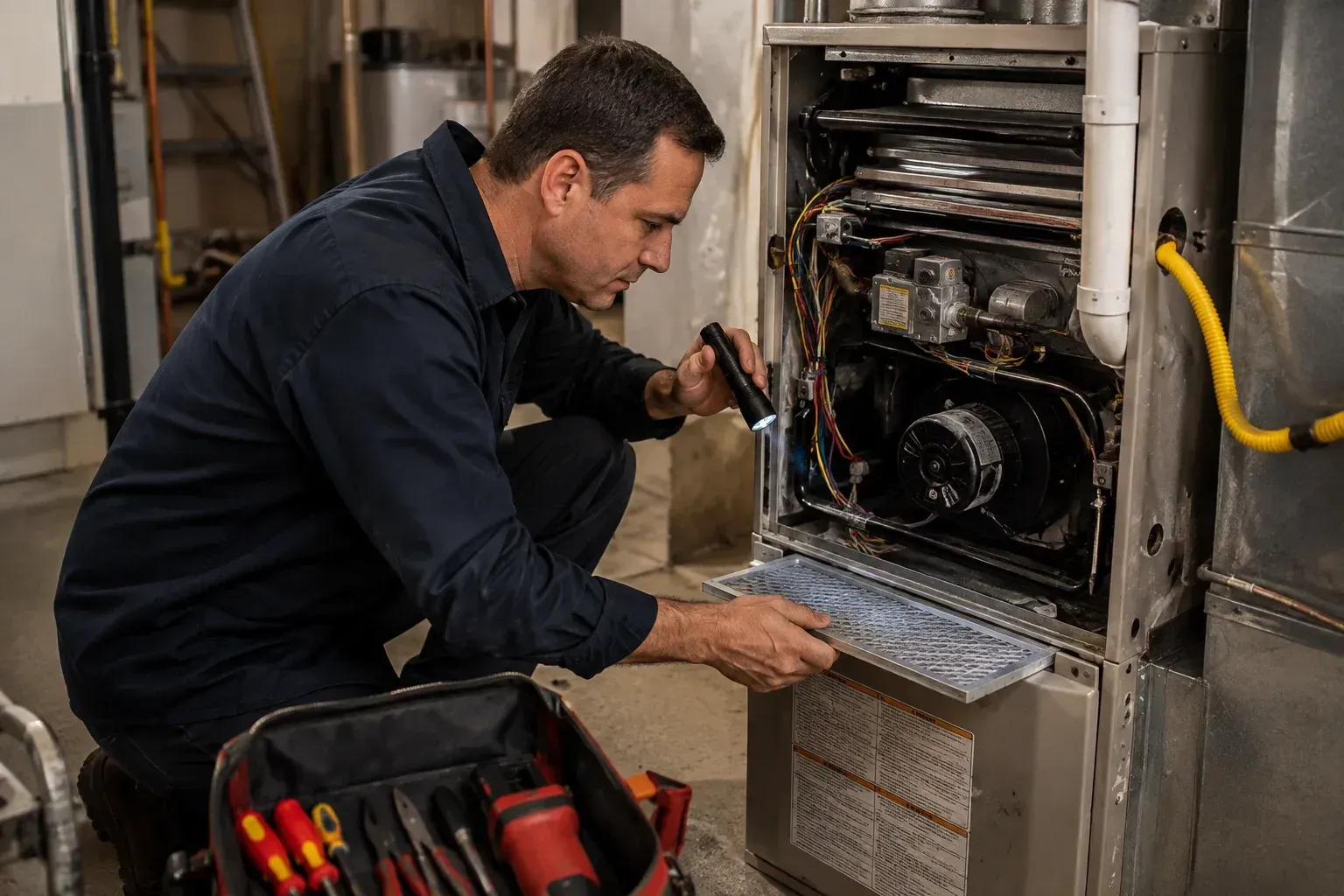
First, the contractor inspects your current system, ductwork, and space to spot any complications. Then they safely shut down and remove the old unit, prepare the area, and position the new furnace. They connect it to your gas line, venting, and ductwork, making sure everything is level and secure.
Once installed, they run the system through startup, test airflow, check for gas leaks, and confirm the thermostat communicates correctly. Finally, they clean up, dispose of the old unit, and give you documentation including the warranty and maintenance recommendations. Read these carefully — they contain important details for keeping your warranty valid.
Questions to Ask Before Deciding
Before you commit, ask your contractor these questions. Their answers reveal a lot about their professionalism.
- How long have you been installing furnaces in the Durham area?
- What warranties come with the furnace, and what does your labor warranty cover?
- Will you pull the necessary permits and handle inspections?
- What happens if you find ductwork problems during installation?
- What's your timeline, and are you available if issues come up afterward?
- Do you offer maintenance plans or financing options?
Clear answers show whether a contractor is thorough and customer-focused.
Conclusion
Furnace installation costs in Durham vary based on furnace type, home age, ductwork condition, and installation complexity. Most homeowners spend between $3,000 and $8,000, though your situation might fall outside that range.
The key is understanding what drives these costs so you can make an informed choice that fits your budget and needs. Whether you choose a basic efficient furnace or a high-efficiency model, proper installation by a qualified professional helps your system run safely and reliably for years.
When you're ready, getting quotes from experienced local contractors gives you a clear picture of what your installation requires. Make sure they evaluate your home thoroughly and answer your questions completely. If you'd like to discuss your options, consider reaching out to a professional who understands Durham's heating needs and can walk you through your choices without pressure.
Frequently Asked Questions
A straightforward replacement usually takes 4 to 8 hours. If ductwork modifications are needed, it can stretch to 10 hours or more. Most contractors finish in one day, though some situations require a follow-up visit.
Furnace installation involves gas connections, electrical work, and precise safety procedures. It requires proper licensing in California and should always be done by a licensed professional. DIY installation risks safety hazards, code violations, and voided warranties.
AFUE rates heating efficiency, while SEER rates air conditioning efficiency. A furnace has an AFUE rating; an air conditioner has a SEER rating. Both matter for your home's overall efficiency.
Not always. It depends on your ductwork's condition and whether it's sized correctly for the new furnace. A contractor evaluates this during the inspection. Leaky or undersized ducts are worth upgrading for better comfort and efficiency.
Sometimes. Many older thermostats work fine, but some newer furnaces run better with modern thermostats. Your contractor confirms compatibility during installation.
Not necessarily, but it's worth considering if your AC is also aging. Furnaces last 15 to 20 years and air conditioners 10 to 15. Replacing both at once means one installation instead of two and matched equipment that works together efficiently.
Most furnaces need annual professional maintenance before heating season, usually a fall tune-up. This keeps your warranty valid and your system efficient. Clean or replace your air filter every 1 to 3 months depending on your household.